
What Is the FODMAP Diet?

Reducing the intake of specific daily products may significantly improve symptoms for individuals suffering from functional gastrointestinal disorders. Scientific attention has focused on the restriction of fermentable short-chain carbohydrates, a nutritional approach known as the FODMAP diet.
Understanding Functional Gastrointestinal Disorders (FGD)
Functional gastrointestinal disorders are chronic diseases including irritable bowel syndrome (IBS), functional constipation, functional diarrhea, functional bloated stomach or swelling, among other not specified ailments. Patients who present these conditions are diagnosed with a functional gastrointestinal disorder (FGD). The IBS is the most frequent affecting almost fifteen per cent of the Mexican population.
Defining FODMAP
The acronym FODMAP stands for Fermentable Oligo-, Di-, Monosaccharides, and Polyols. These are specific carbohydrates that ferment in the colon, often triggering the alterations and symptoms experienced by patients
Key Components and Food Sources
This restriction consists of reducing to the extent possible the intake of foods rich in fructans, galactooligosaccharides, galactans, lactose, fructose and polyols–carbohydrates ferment in the colon and are responsible for the alterations which patients usually suffer.
Fructans are naturally found in products like wheat and onion, as well as in those with added fructose as to improve their texture and flavor.
Galactooligosaccharides are present in milk and dairy products, legumes, and some nuts and seeds.
Fructose and lactose are examples of monosaccharides and disaccharides respectively, and they are found in fruits and their byproducts, marinated meat, and products in which fructose is used as an additive such as bakery and confectionery products.
Polyols–like sorbitol, xylitol, and mannitol–are naturally present in apples, pears, plums, and mushrooms; they are also employed as no calorie sweeteners in products like chewing gum and sugar free candy.
In addition, there are the long-chain polysaccharides which ferment at a lower level and are considered insoluble fiber. Some of the most important components of these polysaccharides are cellulose, hemicellulose, pectin, and resistant starches. The latter can appear in reheated dough, since it would change the structure of starch making it less susceptible of digestion and, consequently, of fermentation in the gut microbiota.
The Role of Polysaccharides and Prebiotics
Polysaccharides are also present in wholegrain cereals, chestnuts, plums, pears, apples, and legumes. What matters the most is that these carbohydrates have a selective impact on the development of desirable microorganisms–that is why they are also known as prebiotics. Prebiotics might be beneficial in the long run for patients with diseases related to FGD, as long as the effect for each case has been identified.
Supervision provided by health professionals will prevent the exclusion of a beneficial food from the patient’s diet and, if necessary, help finding alternatives which do not alter nutrient intake or compromise micronutrient absorption.
Relevant studies consider the intake of certain foods as “safe”, foods that can become part of a FGD patient’s diet without worsening any symptom. In the same way, as previously mentioned, said studies suggest a moderate intake or the reduction of some foods when they have been observed to aggravate digestive discomfort.
Take a look at the following chart:
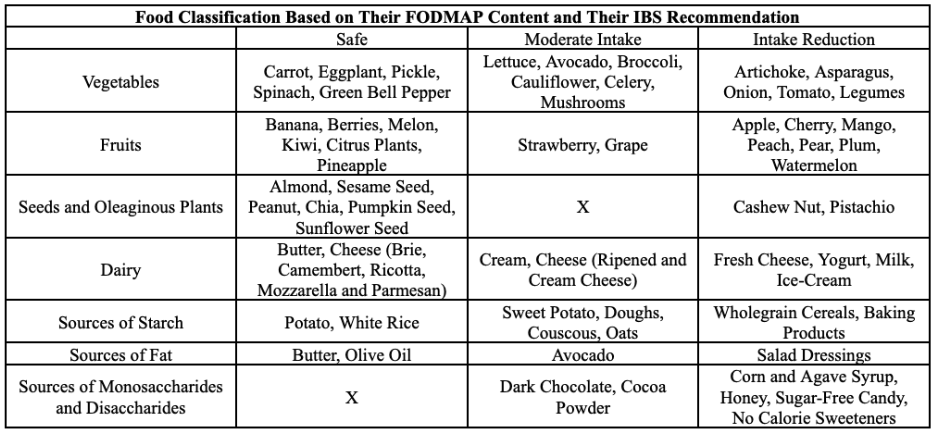
FODMAP diet could make easier the identification of the foods triggering FGD symptoms. The main objective is to find a long-term balance between foods triggering negative effects and those improving symptoms once intake restrictions have been put into place.
Nowadays, the composition of a large number of products have been modified having people with these ailments in mind. Therefore, consumers can learn about FODMAP content by reading product labels.
As to have a personal analysis of the effects each food has and the amounts that trigger symptoms associated with FGD, patients would have to be accompanied by an expert. Additionally, patients can seek guidance on new recipes and cooking techniques which help them find alternatives in order to reduce digestive syndromes.
Writen by Mónica Basave
 References
- CCF (2015, septiembre 1). DIETA BAJA EN FODMAP EN EL SÍNDROME DE INTESTINO IRRITABLE | Revista Médica Clínica Las Condes. elsevier.es.
- EUFIC. (2013, octubre 16). El papel de la microbiota intestinal en la salud humana.
- Rivera, B. A. (2002, junio). Trastorno digestivo funcional: síndrome de Intestino Irritable. Scielo.Org.Pe.
- Martínez Vázquez, S.E. (2016, febrero). FODMAP.
- Tech, R. T. F. (2017, agosto 29). Fibregum de Nexira, una fibra certificada para FODMAP. The Food Tech.

 8 min read
Glycemic Index and Glycemic Load: Amounts Matter
A proper diet, in accordance with health regulations, includes the intake of all nutrients in the right portions and in enough amounts to preserve good health with the energy and satiety required.

More on Food Processing
Why Are Fresh Foods Processed? Fresh foods consumption, regarded as “natural”, requires a minimum processing to prevent illnesses derived from poor h…
Contaminated Foods Which Cause Illnesses
According to information shared by the World Health Organization, around 600 million people–almost one in ten inhabitants–get sick due to contaminated…

Descarga nuestra lista de equivalentes de alimentos en pdf
Descarga gratis en PDF la tabla de equivalentes de alimentos por grupos: cereales, frutas, proteínas y más. Ideal para planear una dieta equilibrada.

Descargable: La importancia de la hidratación en tu cuerpo
En este descargable, exploraremos la importancia fundamental de mantenernos hidratados como parte esencial de una nutrición equilibrada.
Descargable: Todo lo que debes saber sobre la microbiota
Descarga el PDF para aprender qué es la microbiota, la diferencia entre probióticos y prebióticos, obtén una guía de alimentos recomendados.